


Before Moldova vote, anti-LGBTQ+ content spikes online
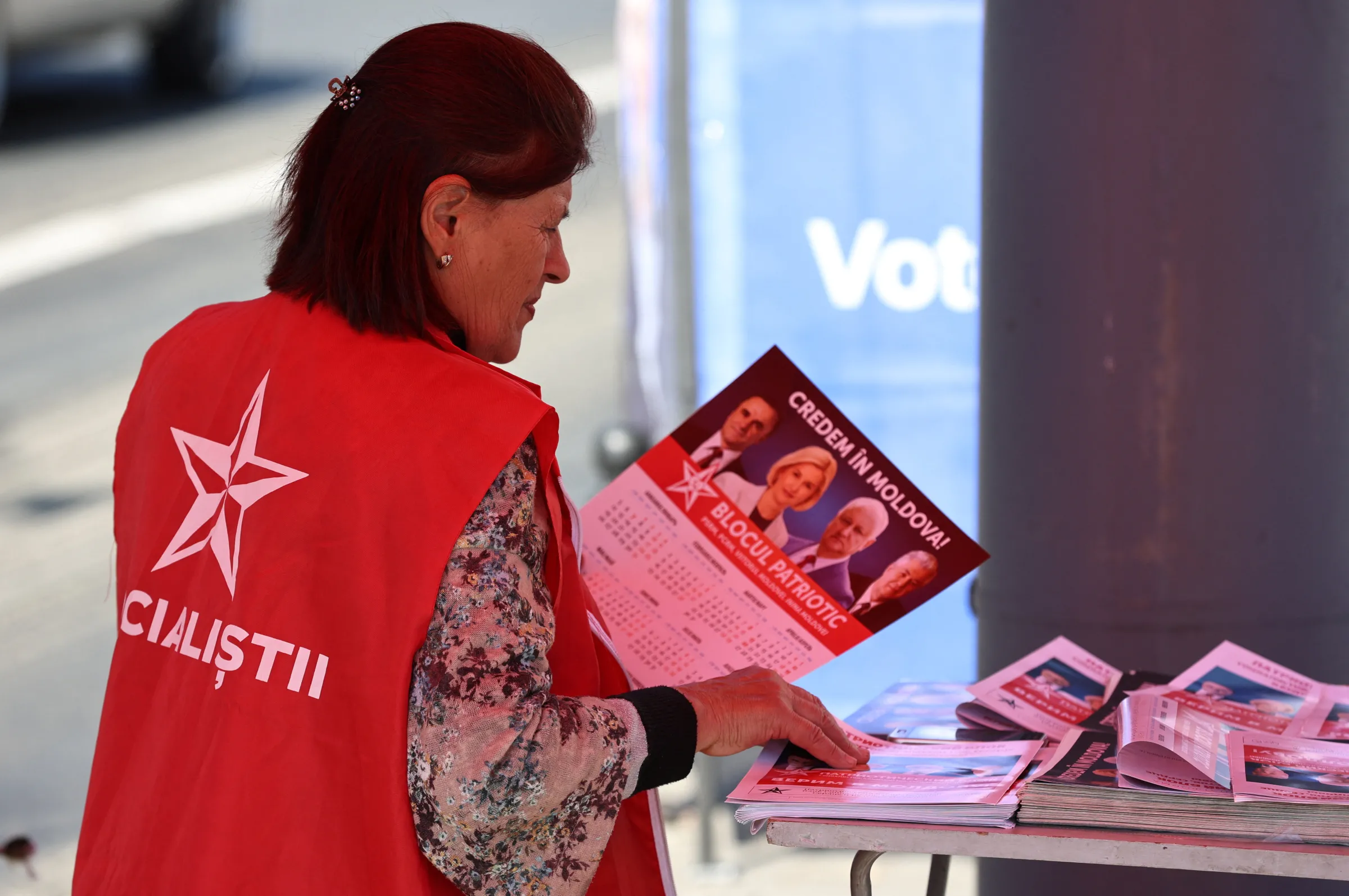
A participant of the Patriotic Electoral Bloc's campaign sorts leaflets while agitating voters in a street ahead of Moldova's upcoming parliamentary elections in Chisinau, Moldova, September 21, 2025. REUTERS/Vladislav Culiomza
What’s the context?
Anti-LGBTQ+ rhetoric floods TikTok, Telegram, Facebook, Instagram as pro-Russian parties seek to erode support for pro-EU party.
- Sunday's parliamentary vote pivotal for Moldova
- Experts accuse Russian actors of interference
- Anti-LGBTQ+ content has flooded social media
LONDON - Ahead of Moldova's pivotal parliamentary election on Sunday, waves of online disinformation have swept through the tiny Eastern European country, with the lives of LGBTQ+ people at the centre of the digital storm.
Social media platforms, including TikTok, Facebook and Telegram, have been awash with created by Russian influence campaigns seeking to discredit the country's pro-European government, experts said.
Sunday's election is expected to determine whether Moldova, which lies between Ukraine and Romania, will tilt towards Russia or continue towards eventual European Union membership.
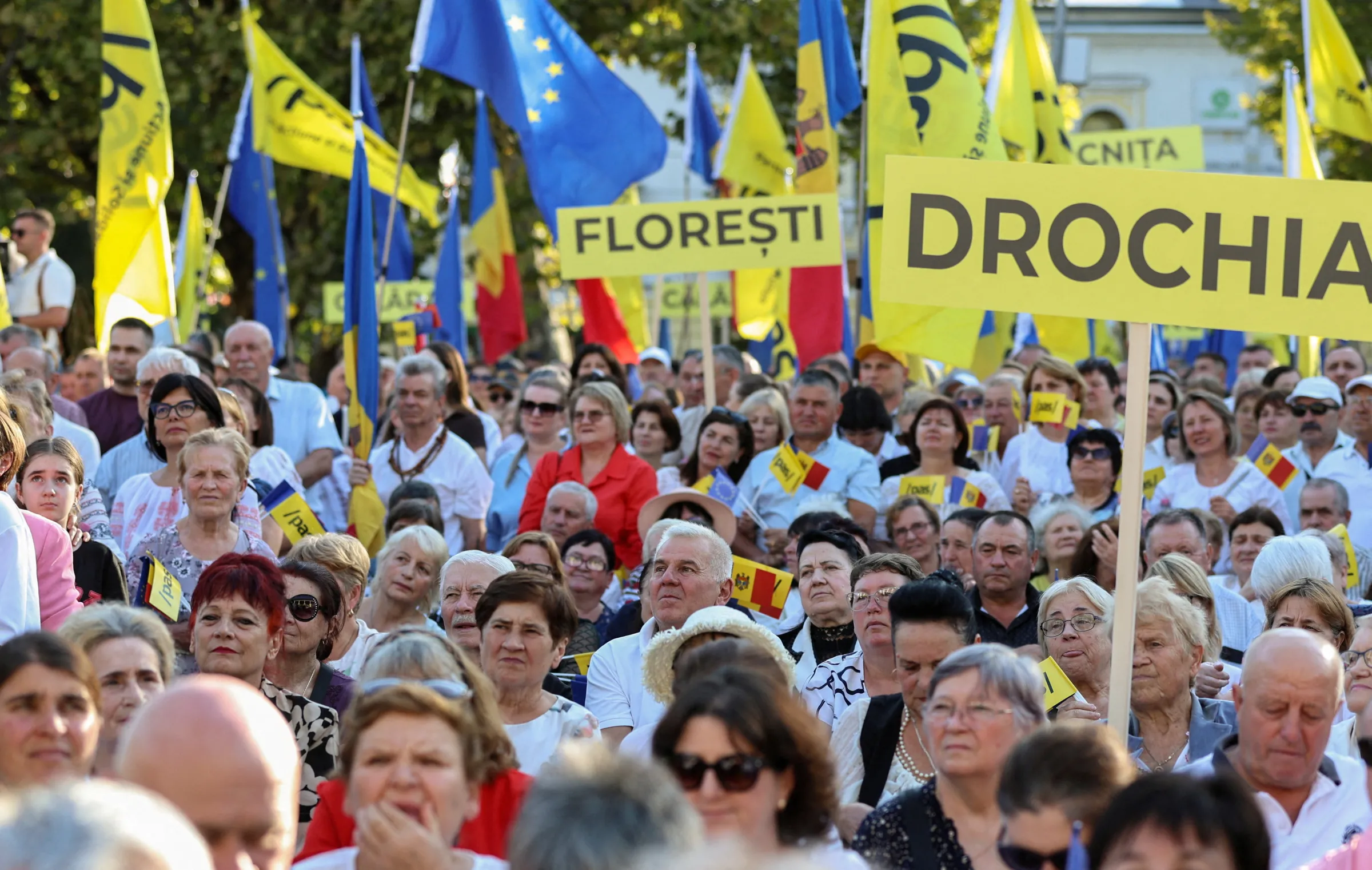
The ruling Party of Action and Solidarity (PAS), which in 2022, is with the pro-Russian Patriotic Bloc and may struggle to hold onto its parliamentary majority, according to recent polls.
The opposition alliance is anti-LGBTQ+, and co-led by the leader of the Socialist Party, Igor Dodon, a former president who has previously proposed a , like those introduced in Russia, Hungary and Bulgaria.
Videos shared on social media by Russian influencers and news channels have frequently linked EU membership to the idea that "LGBTQ+ ideology" will be forced onto children and harm Moldova's Orthodox Christian identity and conservative family values, analysts said.
"LGBTQ+ people are one of the most affected groups by hate speech," said Irina Corobcenco, an analyst from the NGO Promo-LEX Association, who has been monitoring this kind of hate speech since 2018.
"The difference now is it's combined with disinformation and manipulation, and politicians and competitors are using this to justify hatred against LGBTQ+ people," she told Context by phone from Chișinău, Moldova.
'Dangerous for democracy'
Across the world, anti-LGBTQ+ rhetoric is increasingly being harnessed to divide or inflame voters during elections, with a study by human rights group Outright International finding it was used by politicians in last year.
In Moldova, the rhetoric has spilled over from the digital sphere and emerged in .
During a Sept. 3 meeting with the previously banned pro-Russian party, Our Party, leader Renato Usatîi was asked by a supporter: "What are we going to do with this LGBT? Do we ?"
Usatîi did not condemn the statement, the report by the Promo-LEX Association said.
"During this period we have identified more cases of incitement of violence than in other electoral campaigns," Corobcenco said.
Some of the TikTok content circulating in Moldova, and seen by the Context, shows of crowds protesting against same-sex civil unions, and illustrations of children being taught about LGBTQ+ issues .
While similar tactics have been deployed by pro-Russian influencers online before, monitoring groups and activists say content targeting this election has been more widespread.
On Monday, President Maia Sandu said Russia was spending hundreds of millions of euros to and recruiting hundreds of people to stir disorder.
Moscow denies meddling in Moldova's affairs and says Chișinău is stoking anti-Russian sentiment for political purposes.
Analysts at data analysis organisation NewsGuard, primarily based in the United States, said in one 24-hour period, they identified a network of 50 anonymous TikTok accounts posting fake videos in Moldova.
Some of the content has targeted specific organisations.
A story published on a fake LGBTQ+ news site called Proud Europe said the Soros Foundation Moldova, an organisation working to advance democracy as part of the Open Society Foundations, had given 10 million euros ($11.6 million) to Sandu to establish a pro-LGBTQ+ policy programme.
NewsGuard found Proud Europe's domain had been registered anonymously one week before the claim was made.
Soros Foundation Moldova Communications director Dmitri Gudumac said it currently had no LGBTQ+ specific programmes.
"(This) is poisoning the political discourse. Instead of talking about the economy, or justice reform, we're focused on something else," Gudumac said. "That's dangerous for democracy and for the fabric of the society."
Anxiety and hope
LGBTQ+ activists are only too aware of how fake images and content can affect perceptions of their community in real time.
Leo Zbancă, from Moldova's oldest LGBTQ+ organisation GenderDoc-M, said that when the school year restarted in September, videos circulated online that claimed to show 'LGBTQ+ propaganda' leaflets in classrooms.
"They have started to borrow information from Russia. The messages are that all the boys will become girls, and all the girls will become boys," Zbancă said.
Zbancă fears an election victory for pro-Russian forces could see the introduction of anti-lGBTQ+ legislation, like the Bulgarian law banning the "promotion, or incitement" of LGBTQ+ topics in schools, and Georgia's widespread ban on "LGBTQ+ propaganda".
Ahead of Sunday's vote, Zbancă said LGBTQ+ people feel a mix of anxiety and hope.
"These four years are crucial because there will be some irreversible processes that could make it harder to avoid being dragged back to a Russian influence," Zbancă said.
"We are a small country with a lot of economic problems. We should see people as a resource, a real value. What we try to explain over and over over again is that LGBTQ+ people are people."
($1 = 0.8573 euros)
(Reporting by Lucy Middleton; Editing by Jon Hemming.)
Context is powered by the ºÚÁÏÌìÌà Newsroom.
Our Standards:
Tags
- Online radicalisation
- Polarisation
- LGBTQ+
Featured
Go Deeper



Latest on Context



- 1
- 2
- 3
- 4
- 5
- 6