


Q&A: Africa's internet shutdowns double in less than a decade

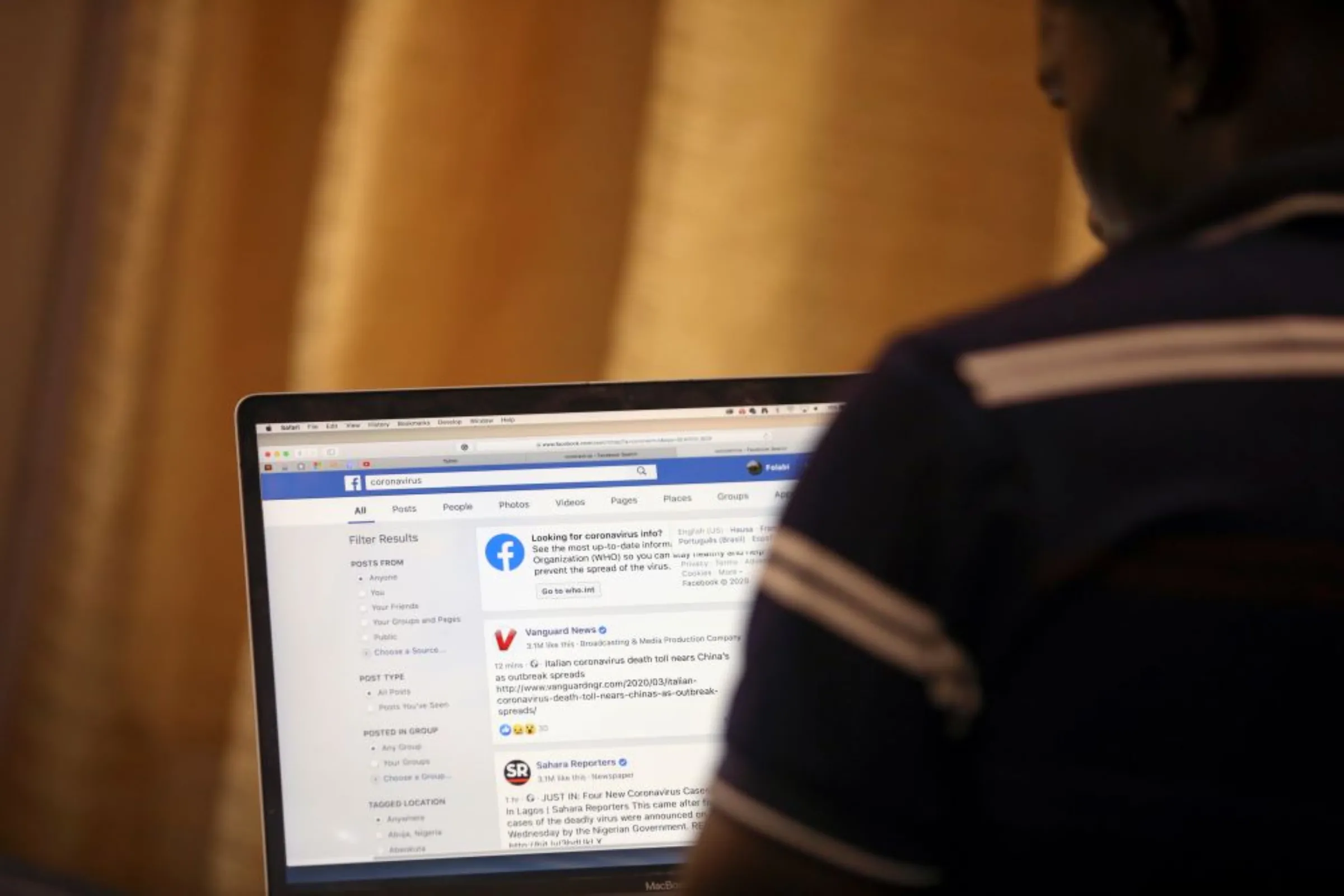
A man opens the Facebook page on his computer to fact check coronavirus disease (COVID-19) information, in Abuja, Nigeria March 19, 2020. REUTERS/Afolabi Sotunde
What鈥檚 the context?
Internet shutdowns doubled across Africa since 2016, with governments using blackouts to control information and suppress dissent.
NAIROBI - Internet shutdowns across Africa have doubled in less than a decade, plunging millions into digital darkness and limiting access to jobs, education and health services, according a new book launched on Thursday.
The number of digital blackouts across the continent surged to 28 in 2024 compared to 14 in 2016, according to "", co-authored by researchers from the African Digital Rights Network and supported by the Institute of Development Studies.
In total, 41 African countries imposed more than 193 internet shutdowns over a period of eight years, with Ethiopia, Sudan and Algeria recording the highest numbers.
Context spoke to Felicia Anthonio, a global expert on internet shutdowns at the charity Access Now and co-editor of the book.
Why have you produced this book?
Across the world, governments often order internet service providers to shut down the internet completely, slow down internet speeds, or block access to digital communication platforms during key events such as protests, elections, school exams and conflicts. Their main aim is typically to exert control over the flow of information.
Despite growing documentation and advocacy against , we noticed these cases were not detailed in a centralised place, so this book aims to do that.
We found that between 2016 and 2024, there were more than 193 internet shutdowns across 41 African countries, as documented by the , a global network of more than 300 organisations fighting against digital blackouts.
How do shutdowns affect people's rights and daily lives in African countries?
In an increasingly connected world, internet shutdowns violate people's fundamental rights to freedom of expression, access to information and assembly.
Shutdowns also obstruct social, economic and political life. When governments shut down the internet, they silence critical voices, limit digital citizenship and democratic participation, deny people access to essential services like healthcare and disrupt people's educational and professional aspirations.
For instance, authorities in Algeria continued to impose week-long exam-related shutdowns over the last eight years .
In Ethiopia, people in Tigray could not access life-saving information and critical services like healthcare and emergency aid throughout a two-year-long internet blackout, further endangering lives and livelihoods during the conflict.
Which countries have had the most internet shutdowns and why?
Ethiopia recorded at least 30 shutdowns, the highest number of shutdowns recorded in Africa. followed closely with 21 cases, while Algeria and had 14 and 10 respectively.
The Ethiopian government has cited various justifications including national security, integrity of school exams, public order and safety, curbing misinformation or deflecting cyber attacks for flipping the kill switch.
Authorities in Sudan also imposed complete internet blackouts which coincided with the in June 2019 and in October 2021, the regime cut access to the internet to prevent information flow about the , suppress public outcry and resistance and quell protests against it.
What methods do governments use to block the internet?
Governments can shut down the internet by completely restricting internet access, downgrading the speed and/or blocking access to digital communications platforms.
These shutdowns can be temporary or prolonged and may target specific platforms, regions, or an entire country. Governments in Africa have employed a variety of these tactics to silence voices, cover up human rights violations and exert control over information flow.
How have African citizens and civil society groups resisted and sought to circumvent internet shutdowns?
Africans are increasingly using Virtual Private Networks or other alternative connectivity like satellite internet or foreign SIM cards, or using bulk SMS to bypass network disruptions, maintain communication and share information.
In Sudan, civil society actors and individuals have won legal rulings ordering the internet to be switched back on in two separate litigation cases.
Similarly, Zimbabwe's High Court ordered an end to a six-day long in 2019 following a lawsuit by civil society actors in the country.
Collective citizen action has also resulted in public commitments from governments to #KeepItOn during the 2023 election period in the Democratic Republic of Congo where internet shutdowns used to be very common.
However, Internet Service Providers remain complicit in imposing these shutdowns as they do little to challenge government shutdown orders.
(Reporting by Nita Bhalla; Editing by Jon Hemming.)
Context is powered by the 黑料天堂 Newsroom.
Our Standards:
Tags
- Content moderation
- Internet shutdowns
- Tech and inequality
- Tech regulation

Featured
Go Deeper


The Backstory
 These links open on


Latest on Context

- 1
- 2
- 3
- 4
- 5
- 6