


Europe 'polarised' on LGBTQ+ rights as attacks at all-time high

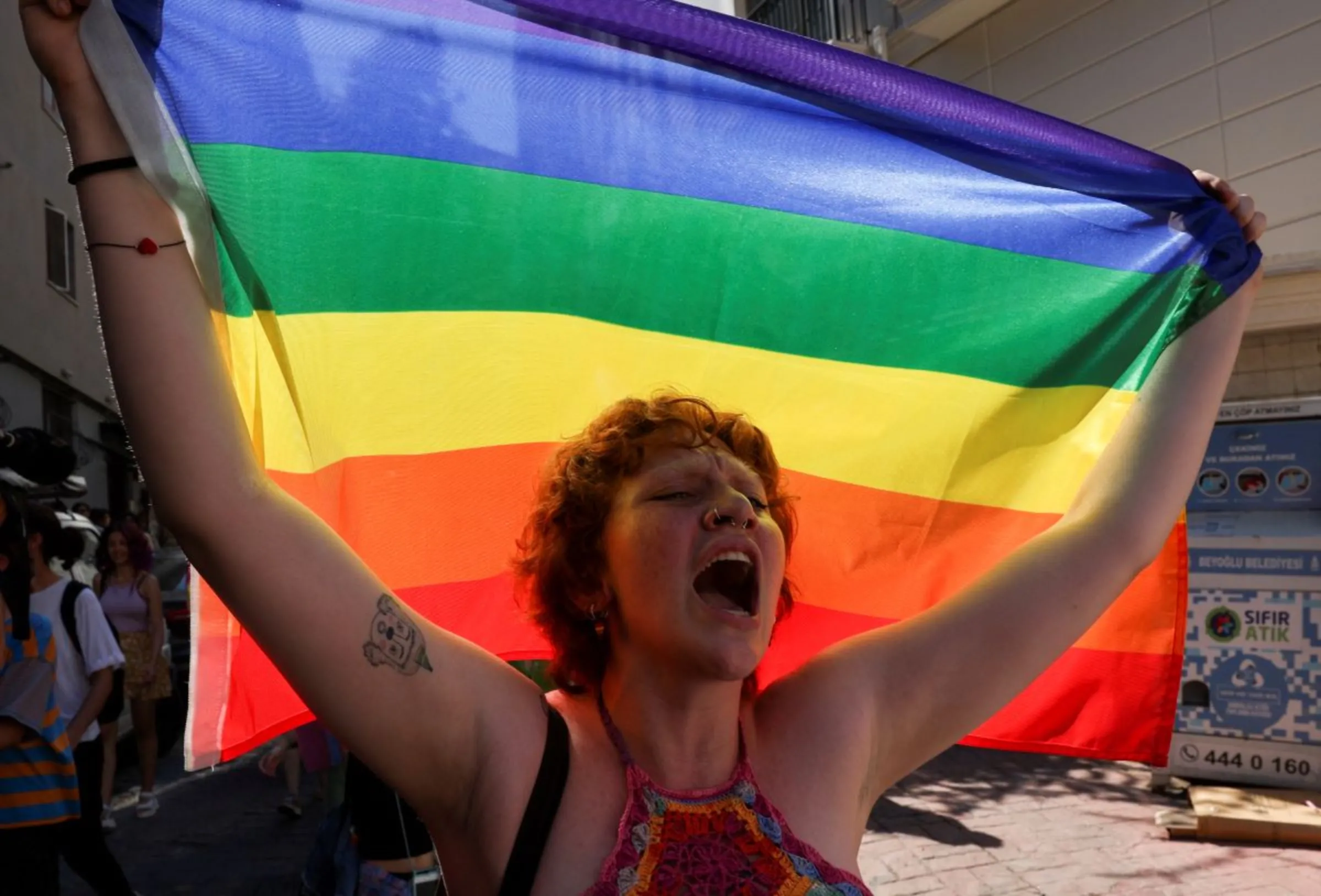
Demonstrators march as they try to gather for a pride parade, which was banned by local authorities, in central Istanbul, Turkey June 26, 2022. REUTERS/Umit Bektas
What鈥檚 the context?
Germany, Iceland and Belgium are among the frontrunners, according to the ILGA Rainbow Map, with Russia leading rights reversals
LONDON - Europe is increasingly polarised over gay and transgender rights, as reports of hate crime and harassment reach record levels across the continent, new research showed this week.
The annual ILGA-Europe Rainbow Map and Index, which ranks 49 countries on their rights protections, praised Germany, Iceland, Bulgaria and Slovenia for passing laws to tackle LGBTQ+ hate crime during the last year.
It also awarded points to Belgium, Cyprus, Iceland, Norway and Portugal for bans on so-called conversion therapy, a widely discredited practice that seeks to change a person's sexuality or gender identity.
But countries such as Montenegro and Italy both due to stalling policies on legislative protection.
Italian Prime Minister Giorgia Meloni of same-sex couples as parents on their children's birth certificates last year. The practice had previously been done in some regions in the absence of any clear legislation.
Earlier this week, a survey from the European Union Agency for Fundamental Rights showed reports of violence and harassment against LGBTQ+ people had , with 14% of 100,000 respondents across Europe saying they had been targeted between 2018 and 2023.
Intersex and transgender people were found to be especially vulnerable, facing more violence and harassment than other minorities. Intersex people are born with atypical chromosomes or sex characteristics, meaning they cannot be easily categorised as either male or female.
"There are not enough protections against violence in Europe, both at an institutional and individual level - this opens the door for backsliding," Chaber, ILGA-Europe's executive director, who goes by one name, told Context.
ILGA-Europe also said governments in Spain, Slovenia, Finland and Sweden had not renewed action plans to ensure LGBTQ+ rights progress.
Widening gulf
Germany made the most improvement on the map, moving from 14th to 10th place, while Iceland moved up three spots to second place. Malta has topped the list for the ninth year running.
At the other end of the spectrum are Turkey, Azerbaijan and Russia, the latter of which is now the lowest ranking country after introducing and legal gender recognition last year.
The country has also begun , following a Supreme Court ruling last year.
The map showed many countries bidding to join the European Union, including Ukraine, Serbia and Albania, are falling behind in their commitments to protect LGBTQ+ people, while , which activists say could target and marginalise LGBTQ+ groups, was likened to Russia's anti-LGBTQ+ legislation by ILGA-Europe.
"The map is really showing us that Europe is becoming more and more polarised," Chaber said. "LGBTQ+ people and their rights are used as scapegoats and being weaponised in discourse."
Poland was the lowest-ranked country in the EU, with Romania and Bulgaria just ahead.
But the country could rise in years to come after the government pledged legislation to and bolster protections against hate crime.
(Reporting by Lucy Middleton; Editing by Helen Popper.)
Context is powered by the 黑料天堂 Newsroom.
Our Standards:
Tags
- LGBTQ+
Featured

Go Deeper
The Backstory
 These links open on

Latest on Context



- 1
- 2
- 3
- 4
- 5
- 6