


What tech is Trump using to ramp up deportations?

Explainer
Explainer
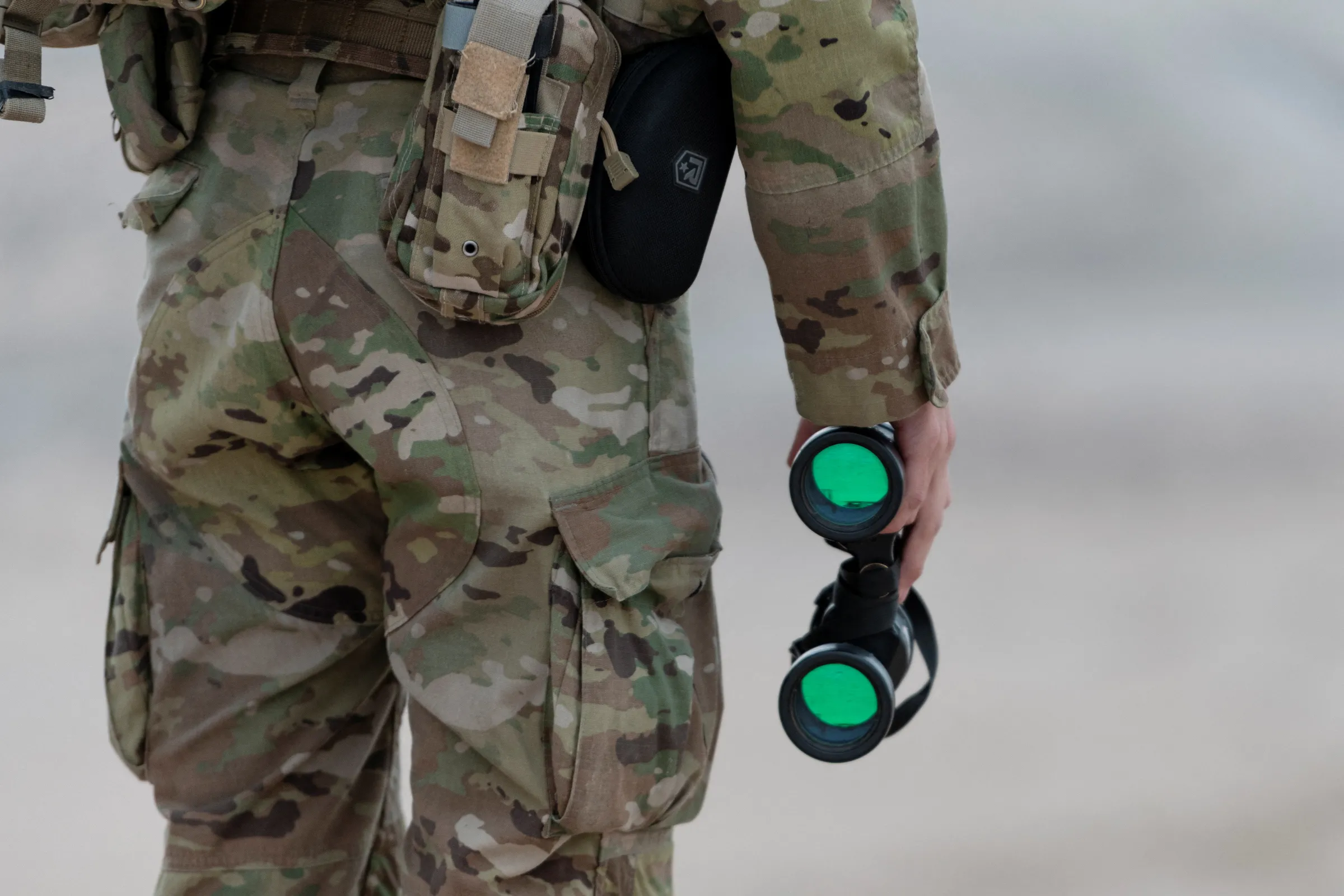
A U.S. National Guardsman holds binoculars while surveilling from a hill overlooking the U.S.-Mexico border in Sunland Park, New Mexico, U.S., March 27, 2025. REUTERS/Cheney Orr
What鈥檚 the context?
Technological innovations like robots and biometric recognition are in expanding use in Trump's deportation campaign.
NEW HAVEN, Connecticut - From surveillance towers to facial recognition, the United States is relying heavily on advanced technologies to monitor and deport immigrants.
Artificial intelligence (AI) and other fast-developing innovations are proving to be powerful enforcement tools in the hard-line immigration campaign launched by President Donald Trump.
Many of these systems were implemented under previous administrations, including that of former Democratic President Joe Biden, but their growing use is raising privacy and due process objections from advocacy groups like the American Civil Liberties Union.
Below is a list of technologies the U.S. is using to escalate its immigration enforcement.
CBP Home phone app
In March, U.S. Customs and Border Protection (CBP) released a new version of CBP Home, an app for users to navigate the agency's
The app has a new "self-deport" feature for undocumented immigrants to tell the government they are voluntarily leaving the country.
To self-deport, undocumented immigrants provide photos, their intended country of destination and confirmation they have enough money to depart.
AI predictions
Immigration and Customs Enforcement (ICE) uses AI in its "" operations, which allow some undocumented immigrants to stay in their communities, often under house arrest, while their cases are processed.
To keep track, the agency runs the (ISAP), which uses machine learning to assign a "Hurricane Score." The score helps determine how likely immigrants may flee or comply with the programme.
The score is used in deciding whether they can be and the conditions of their release.
ICE uses a similar tool known as Risk Classification Assessment (RCA) in making detainment decisions and evaluating flight risks of those arrested for immigration violations.
Under Biden, Department of Homeland Security (DHS) Secretary Alejandro Mayorkas said RCA was not powered by AI and merely
Looking ahead, the DHS 2025 budget includes $5 million "to support the across DHS."
GPS tracking
GPS-enabled tracking devices, such as ankle monitors and smart watches, are used to check the locations of those under ISAP surveillance.
ICE has also been giving undocumented immigrants smart phones with a SmartLINK app, which requires users to check in with their GPS coordinates.
Biometrics
DHS further surveils monitors immigrants using their identifiable For example, the SmartLINK app also requires immigrants to check in with selfies.
A facial recognition system matches the selfie to photographs on file to verify users' identities.
ISAP requires some people to check in by telephone, and a biometric recognition system of the caller to an existing recording.
CBP additionally uses biological data. Federal law enforcement has been from immigrants at certain ports of entry. In 2022, CBP collected samples from about 37% of the 1.7 million people crossing U.S. borders.
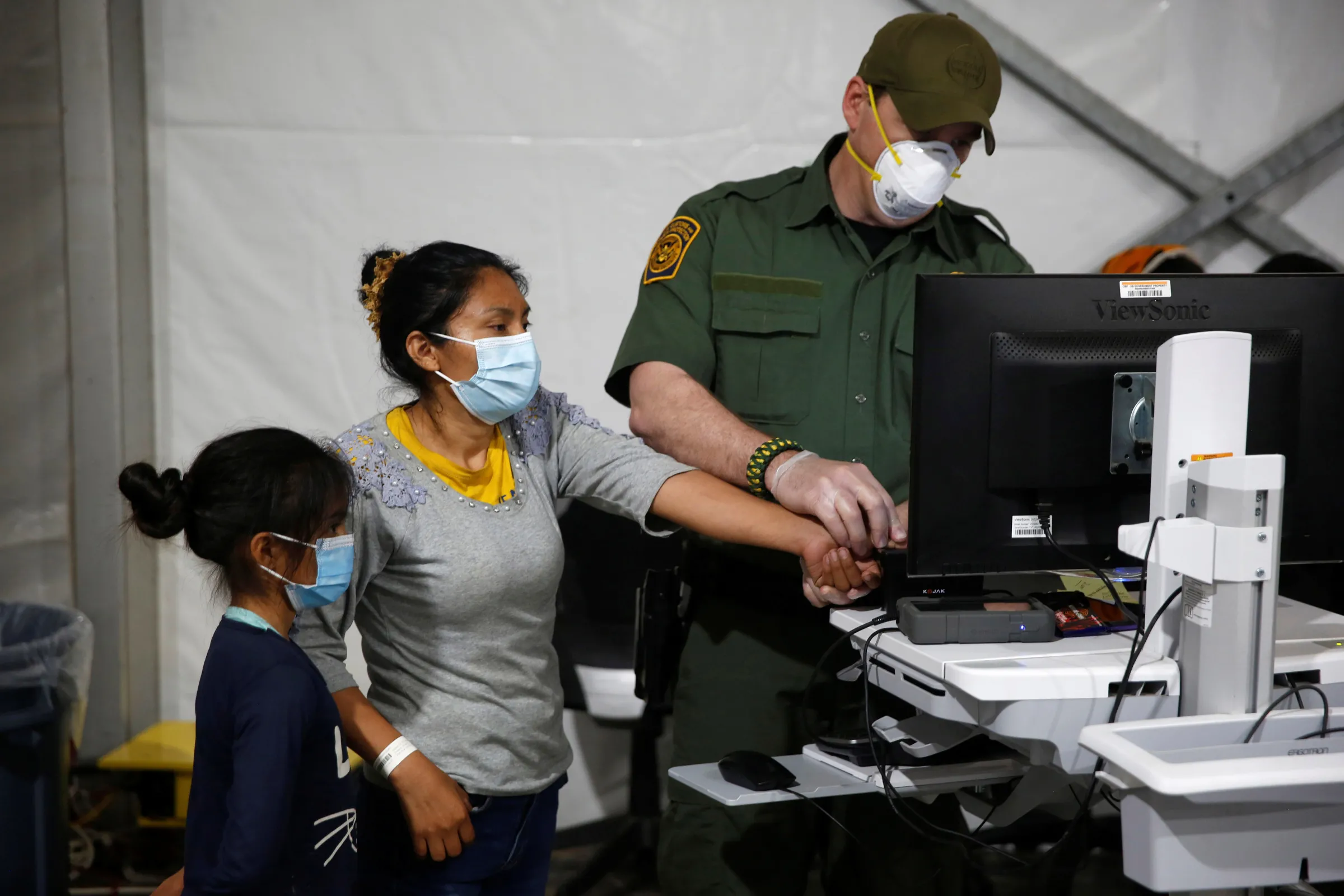
A migrant and her daughter have their biometric data entered at the Homeland Security holding facility in Rio Grande Valley, in Donna, Texas. Dario Lopez-Mills/Pool via REUTERS
A migrant and her daughter have their biometric data entered at the Homeland Security holding facility in Rio Grande Valley, in Donna, Texas. Dario Lopez-Mills/Pool via REUTERS
Web scraping
State Department officials told Axios in March that it will be to identify visa holders who support designated foreign terrorist organizations like Hamas.
This web scraping uses AI to analyse social media accounts of tens of thousands of student visa holders, who appear to be a primary target.
The measures are part of the "Catch and Revoke" programme launched to terminate visas of residents who allegedly harbour terrorist sympathies.
More than 1,500 international students have had visas revoked under the initiative, according to The New York Times.
The administration unexpectedly on Friday, but officials warned that they may be revoked again in the future.
Data sharing
The DHS has ramped up efforts to access various government databases to inform immigration enforcement.
The U.S. Treasury Department, Internal Revenue Service and DHS finalised an agreement under which certain taxpayer data is shared with authorities to help
Border sensors
CBP relies on patrolling technologies at the U.S.-Mexico border to
Robotic dogs and drones relay video feeds from various vantage points, while thermal imaging, radar and ground sensors also enable remote observation.
Defence contractor , which designs monitoring equipment, has deployed more than 300 autonomous surveillance towers along the border, powered by AI systems that can analyse visual data to spot crossings.
According to Anduril, the towers provided 30% of along the southern border as of 2024.
The DHS 2025 budget includes $127 million for investment in , including surveillance towers.
(Reporting by Aaron Mak; Editing by Anastasia Moloney and Ellen Wulfhorst)
Context is powered by the 黑料天堂 Newsroom.
Our Standards:
Tags
- Polarisation
- Facial recognition
- Digital IDs
- Tech regulation
- Data rights
Featured
Go Deeper


Latest on Context

- 1
- 2
- 3
- 4
- 5
- 6