

Philippine marine life under threat from industrial fishing

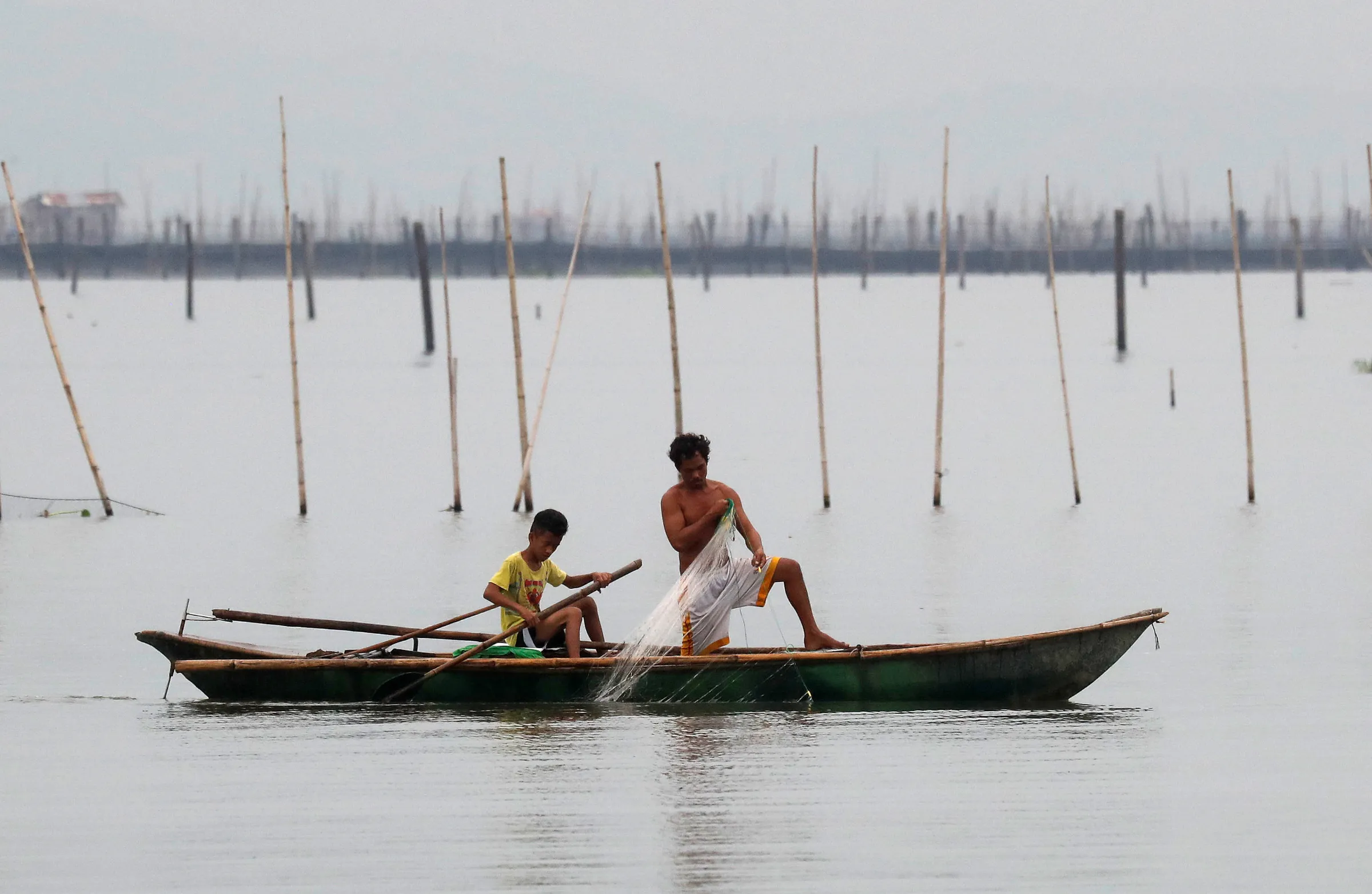
Fishermen recover nets at their fishpens in Laguna de Bay, in Muntinlupa, Metro Manila, in Philippines, September 14, 2018. REUTERS/Erik De Castro
What鈥檚 the context?
Scientists warn a court ruling that allows large commercial fishing boats in waters near cities may deplete fish stocks.
- Supreme Court decision may accelerate fish stock decline, scientists warn
- Local mayors and fishers oppose ruling, citing threats to livelihoods
- Municipal waters contain protected habitats
MANILA - Impoverished fishing communities in the Philippines are caught in a David-and-Goliath fight with industrial fishing companies after the country’s top court loosened restrictions on commercial operations in protected coastal waters.
Already facing threats from extreme weather and urban development that have destroyed fish breeding grounds, fishers fear they may now have to compete with large vessels in municipal waters, the 15-km (9 mile) stretch of sea off the coastlines of cities.
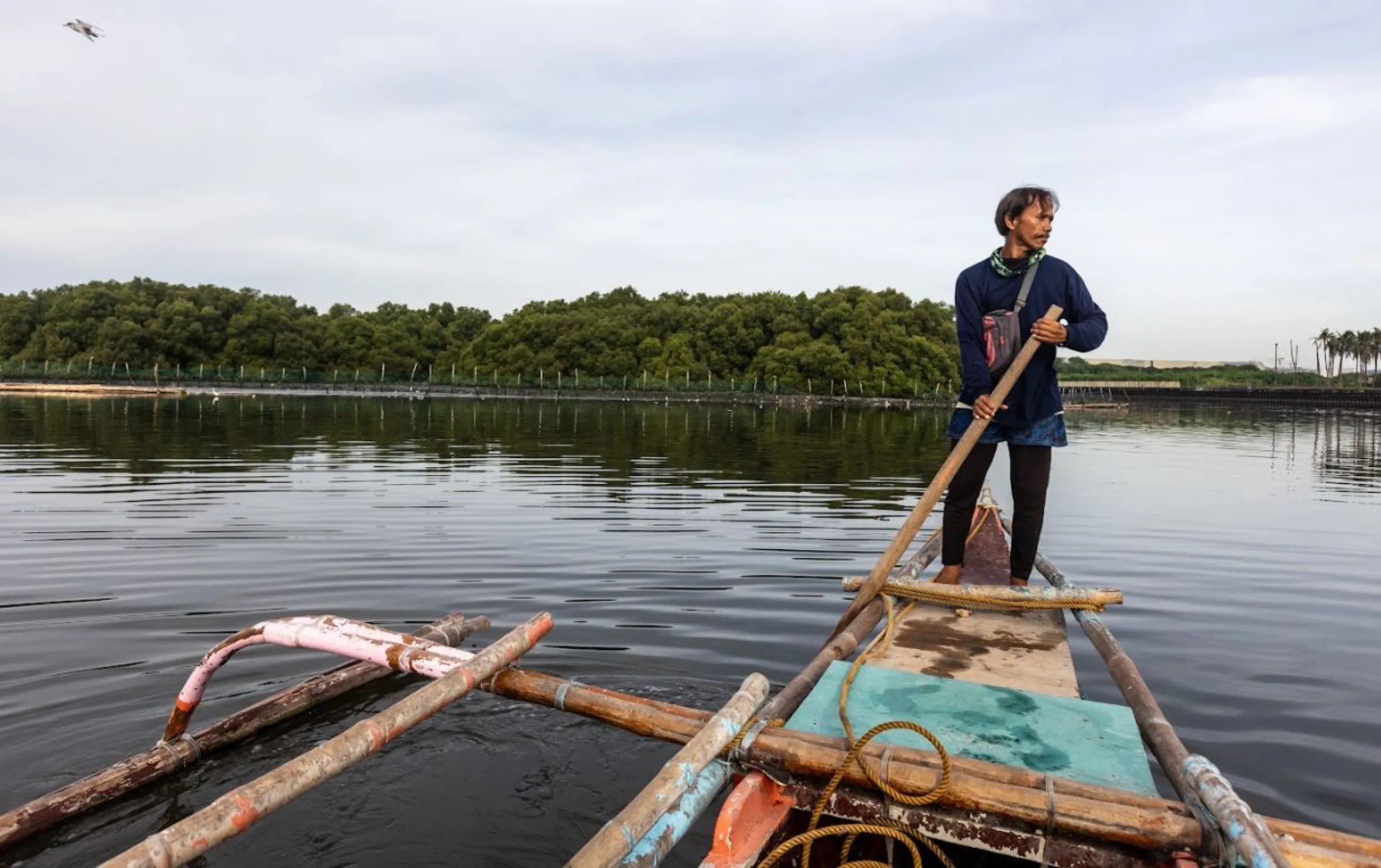
"Once commercial fishing vessels enter our area, there will come a time when we will no longer be able to catch any fish," said Rommel Escarial, 37, who has fished Manila Bay since he was a teenager.
Mayors, , fishing communities and the national government have all appealed against a last year that invalidated a ban on large-scale fishing operations in , where about 2 million people rely on fishing for their livelihoods.
While the Supreme Court decision is not yet final during the appeals process, lawyer Grizelda Mayo-Anda of the Environmental Legal Assistance Center said that some commercial fishers have already been entering municipal waters.
"In Palawan province … commercial fishers now use the ruling to their advantage," said Mayo-Anda, whose NGO has joined one of the appeals.
Municipal waters not only provide income to communities, who are , but also act as extensions of protected marine areas by preventing overfishing in productive habitats to allow recovery of depleted stocks.
Small-scale Filipino fishers, who use more sustainable methods such as hand-lining, cast net fishing or bamboo fish corrals, have struggled for years with the encroachment of commercial fishing vessels in municipal waters.
Some 370,000 municipal fishing vessels and more than 5,000 commercial vessels are registered in the Philippines, according to 2022 data from the government’s Bureau of Fisheries and Aquatic Resources.
Last year , according to government figures, while production from both commercial and municipal fishers from 2010 to 2023 due to overfishing, illegal fishing and habitat destruction.
Commercial fishing often involves trawling, in which a vessel uses nets to collect everything in its path, damaging coral reefs, seagrass beds and other habitats.
"If we totally allow commercial fishers even into municipal waters, it will only further decline our fisheries production," said Jerwin Baure, a marine biologist and member of the Advocates of Science and Technology for the People, an association of Filipino scientists.
Few protections
The League of Municipalities, an association of more than 1,400 mayors, questioned the ruling in February, saying preferential rights for small-scale boats was a "matter of social justice, economic stability and environmental sustainability".
Alfredo Coro, mayor of the coastal town of Del Carmen, also appealed to Philippines President Ferdinand Marcos Jr. and Supreme Court justices to overturn the ruling.
"The small fishers are… continuously being exposed to multiple threats including impacts of climate change, low income without social protection and limited access to public services due to their remote habitation," he said in an open lette shared with shared with Context.
Of the Philippines’ more than 2 million square km (772,000 square miles) of marine waters, 15% are classified as municipal waters, while commercial fishing vessels are allowed to fish within 84% of territorial waters, according to the Philippine Association of Marine Science, an advocacy group.
Fishers compete in shallow waters of up to 50 metres depth, because these are the richest fishing grounds due to their proximity to sunlight and nutrients.
Under the Philippines’ fisheries code, small to medium commercial vessels may be given permission to fish in municipal waters without active gears like trawlers or towed nets which damage ecosystems.
Trawls are used to catch saltwater species like shrimps and anchovies, while purse seine – in which a large net surrounds a school of fish - is used for surface-dwelling and midwater species such as sardines, tuna and mackerel.
Baure said the court ruling may force municipal and commercial boats to fight for fish stocks, with smaller boats at a clear disadvantage in fuel and equipment.
"Our country is already facing a lot of cases of illegal fishing, such as commercial vessels illegally entering municipal waters. That alone was a challenge to control," he said.
Scientists at the Philippine Association of Marine Science have called for a long-term and science-based harvest strategies that will provide equitable access to fisheries without harming marine biodiversity.
(Reporting by Mariejo Ramos. Editing by Jack Graham and Ayla Jean Yackley.)
Context is powered by the 黑料天堂 Newsroom.
Our Standards:
Tags
- Climate policy
- Agriculture and farming
- Biodiversity
- Water




Featured

Go Deeper
The Backstory
 These links open on



Latest on Context


- 1
- 2
- 3
- 4
- 5
- 6