

India has big clean energy goals - so why is it banking on coal?

Explainer
Explainer
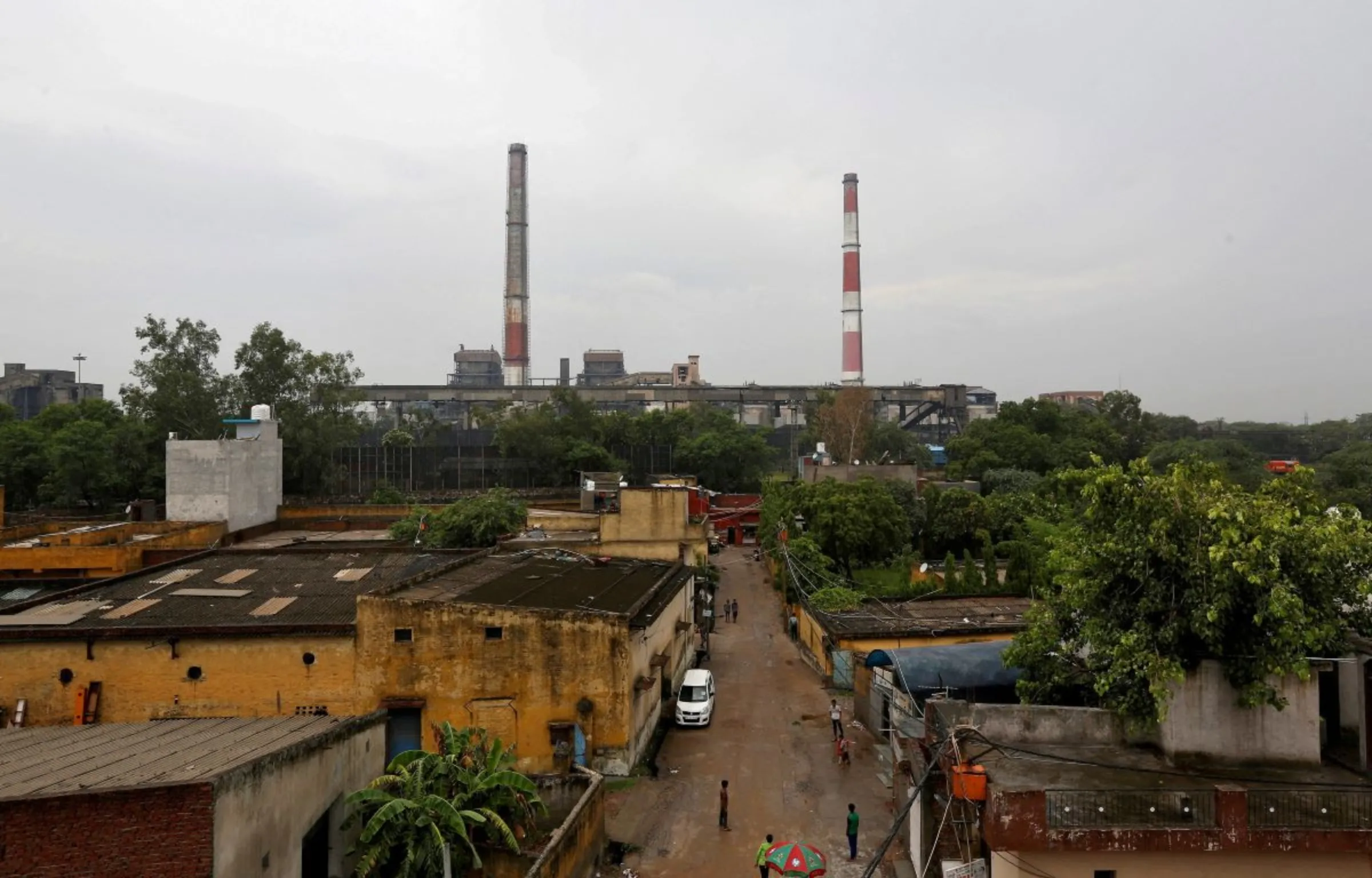
Chimneys of a coal-fired power plant are pictured in New Delhi, India, July 20, 2017. REUTERS/Adnan Abidi
What鈥檚 the context?
Amid global calls to end coal dependency, new projections show it will remain India's biggest source of power by 2030, even as renewable energy grows
- India's coal power capacity set to rise 19% by 2030
- Renewable energy goals ambitious but not enough to meet demand
- Scientists say capping warming at 1.5C requires fast coal cuts
NEW DELHI - As scientists and activists urge rapid cuts in the use of climate-heating coal for power production around the world, new projections from India show that coal will remain its biggest source of electricity this decade, despite a fast rise in the nation's renewable energy capacity.
Globally, $1.7 trillion - 60% of total energy investment - is expected to go into clean technologies, including renewable energy, in 2023, , the International Energy Agency (IEA) said on Thursday.
Countries like India need fast deployment of renewables to meet their green power goals. But the IEA said that growth could be held back by low levels of investment in emerging economies due to factors such as higher interest rates, unclear policy frameworks, weak power grids and financially stressed utilities.
In India, by 2030 coal will still generate the highest share of its electricity at 55%, down from 73% today, while renewables, led by solar, will account for 31%, up from 12% now, the country's Central Electricity Authority (CEA) said this month.
A flagship climate science report from the U.N.'s Intergovernmental Panel on Climate Change (IPCC) in March called for this decade to limit the rise in global average temperatures to 1.5 degrees Celsius above pre-industrial times.
Those emissions cuts should include an - the most climate-polluting fossil fuel - between 2020 and 2030, according to modelling by scientists who worked on the IPCC report.
That would require large emerging economies including China, India and South Africa - which still depend heavily on coal for their electricity - to phase down their coal use substantially in the coming years, experts said.
However, those countries have repeatedly said that coal is important for their energy security - and India has resisted efforts by some governments at U.N. climate negotiations to secure a commitment to phase out coal power.
Here we examine what India’s continued reliance on coal means for its carbon emissions and global energy politics.
Why does India need more coal along with ambitious renewables targets?
India has one of the world's most ambitious renewable energy targets, to install 500 gigawatts (GW) of capacity by 2030 and meet half of its installed electricity capacity from non-fossil fuel sources, including nuclear and hydro.
Installed capacity is the maximum power a plant can produce, while generation measures the amount of electricity produced in one hour.
The CEA’s new projections show that India will triple its installed renewables capacity, beating its target - a positive sign, experts said, as discussions to set a global target for renewables gather pace.
The United Arab Emirates, which is hosting this year’s U.N. climate summit, wants countries to commit to triple renewables capacity globally by 2030.
In India, meanwhile, coal power capacity is set to increase by a smaller 19%, shrinking its share to 32% of the total by 2030, down from about half now.
Nonetheless, actual electricity generation from coal is set to remain the highest source of power by the end of the decade, the CEA numbers show.
This is because India's renewables targets, while ambitious, will still not be enough to meet rising power demand, said Rahul Tongia, a senior fellow at the Delhi-based Centre for Social and Economic Progress.
India’s per-capita electricity consumption will increase rapidly as the 900 million people who gained access to electricity in recent years buy more appliances.
Demand will also increase along with growth in electric vehicles, infrastructure and cooling needs amid rising heat fuelled by climate change.
Another concern is that renewables do not offer a reliable source of power generation, as they depend on variable natural resources, from sunlight to wind and water.
To help smooth supply, India needs more than 60 GW of battery storage to fully utilise the potential of its 2030 renewables goal, according to the CEA.
Yet grid-scale battery storage is costly, Tongia noted, with supply chain disruptions linked to the COVID-19 pandemic and the Russia-Ukraine war pushing up prices.
India is counting on hydro to balance its grid with the intermittent nature of renewables. Yet while hydropower capacity is growing, it has run up against problems, including being blamed for damage to Himalayan towns and infrastructure from construction of dams and run-of-river projects.
India also has plans to add nuclear power but nuclear has not accelerated as fast as other forms of non-fossil-fuel energy, Tongia said, while India has also struggled to secure gas supplies.
“Now what is India left with? Coal remains the backstop,” he added.
What does more coal mean for India’s carbon emissions?
India was the world's fourth-largest carbon emitter in 2021, and its emissions are , fuelled by coal use for power generation, according to a 2022 report from the Global Carbon Project.
In addition, India is eyeing rapid economic development in the coming decades, which will require considerably more energy, meaning the sources of that energy will have global repercussions for the climate.
India argues that, historically, it has contributed little to global warming and has set a target of reaching net-zero emissions only by 2070, some 20 years after most other countries.
While it is now home to about 17% of the world's population, its cumulative emissions from 1850-2019 are less than 4% of the global total and its per-capita emissions remain low at about one-third of the world average.
But experts expect India's emissions will continue growing this decade and next, , in the absence of an official timeline.
Even with the planned increase in coal power generation by 2030, India's annual coal consumption will likely rise only slightly from its current 10% share of the world average, Tongia noted.
Why is global climate action focused on cutting coal use faster than oil and gas?
Global emissions in 2021 were 25% higher from oil and gas than from coal. Some experts are calling for a greater focus on cutting emissions from oil and gas, compared with the emphasis so far on coal.
A 2022 IPCC report concluded that, to limit global warming to 1.5C, coal use should fall by nearly 75% this decade - or 80% in the power sector alone - with oil and gas use dropping by about 10%.
The complex models used by scientists weigh up changes such as how quickly the world needs to adopt electric cars, how much clean energy is needed, and which fossil fuels to slash. They are based on calculations of the efficiency and cost-effectiveness of different ways to make emissions cuts.
That approach tends to push the burden onto countries with lower incomes - which are heavier users of coal - because measures to reduce emissions are cheaper there than in rich nations, experts say.
However, a paper published in the journal Nature this February found that IPCC pathways require like India "twice as fast as achieved historically for any power technology in any country".
It said that if more scenarios considered equity, use of coal would decline slower, and oil and gas faster.
(Reporting by Bhasker Tripathi; Editing by Megan Rowling.)
Context is powered by the 黑料天堂 Newsroom.
Our Standards:
Tags
- Clean power
- Fossil fuels
- Net-zero




Featured

Go Deeper


The Backstory
 These links open on



Latest on Context





- 1
- 2
- 3
- 4
- 5
- 6